The Alchemy of the Pour
The role of the bronze pour is much more than the short, intense, visceral transformation that occurs; it is a vital, holistic core around which the creation of sculpture exists. Unlike other parts of the process, the bronze pour hasn’t changed much for five centuries. It provides a tangible link to a shared DNA, one that transcends cultures and time.
Preparation and Presence
Anticipation precedes the pour, yet the main event is built upon weeks and months of labour. This is the quiet work; the meticulous preparations of patterns and the building of investment refractory moulds.
The physical act of pouring molten bronze remains a singular experience, yielding both intentional and unintentional outcomes. It is very much an art, a balance of preparation and preparedness, held alongside the ability to keep calm under pressure when the unexpected occurs.
The Melt: A Ritual of Transformation
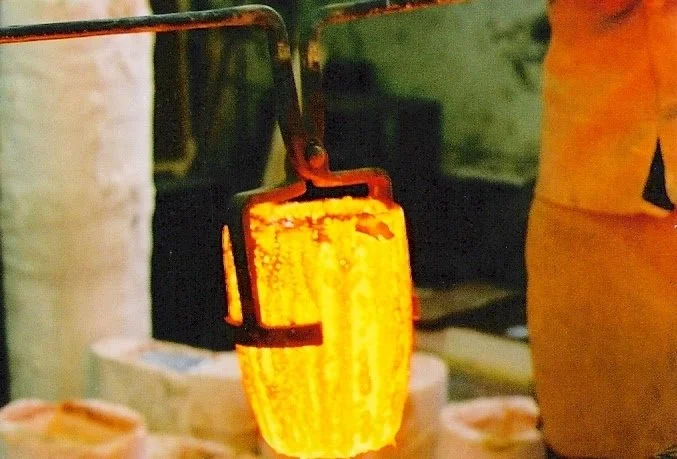
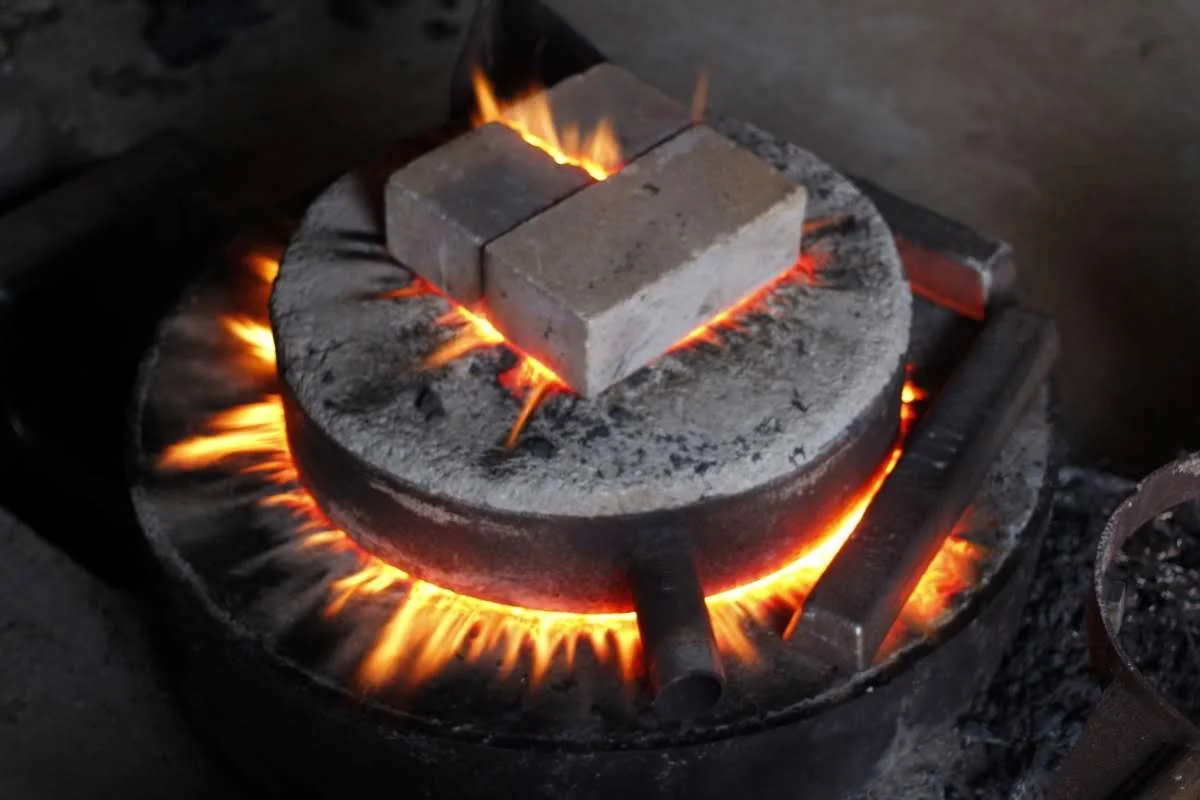
The melt is a period of profound transition. Inside the crucible, solid bronze ingots are fed into the furnace, subjected to an unrelenting, intense heat. As the temperature climbs toward 1200°C, the crystalline molecular structure of the metal surrenders.
It ceases to be a cold, hard commodity and becomes liquid light transcending into a roiling, incandescent pool of energy. This is the ritual stripping away of previous form, purging the material to prepare it for its new form.
The Intersection of Soul and Void
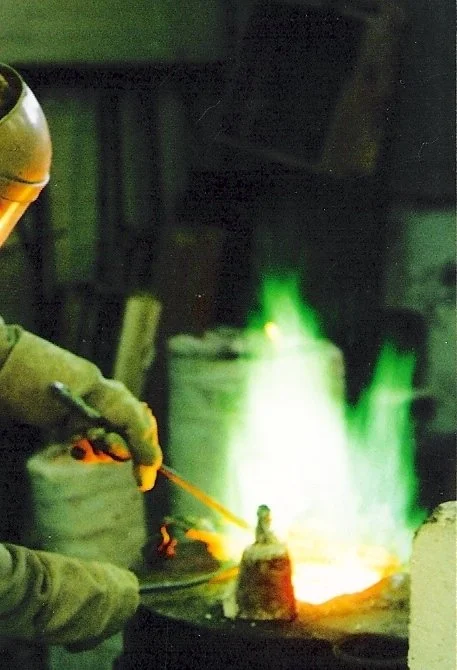
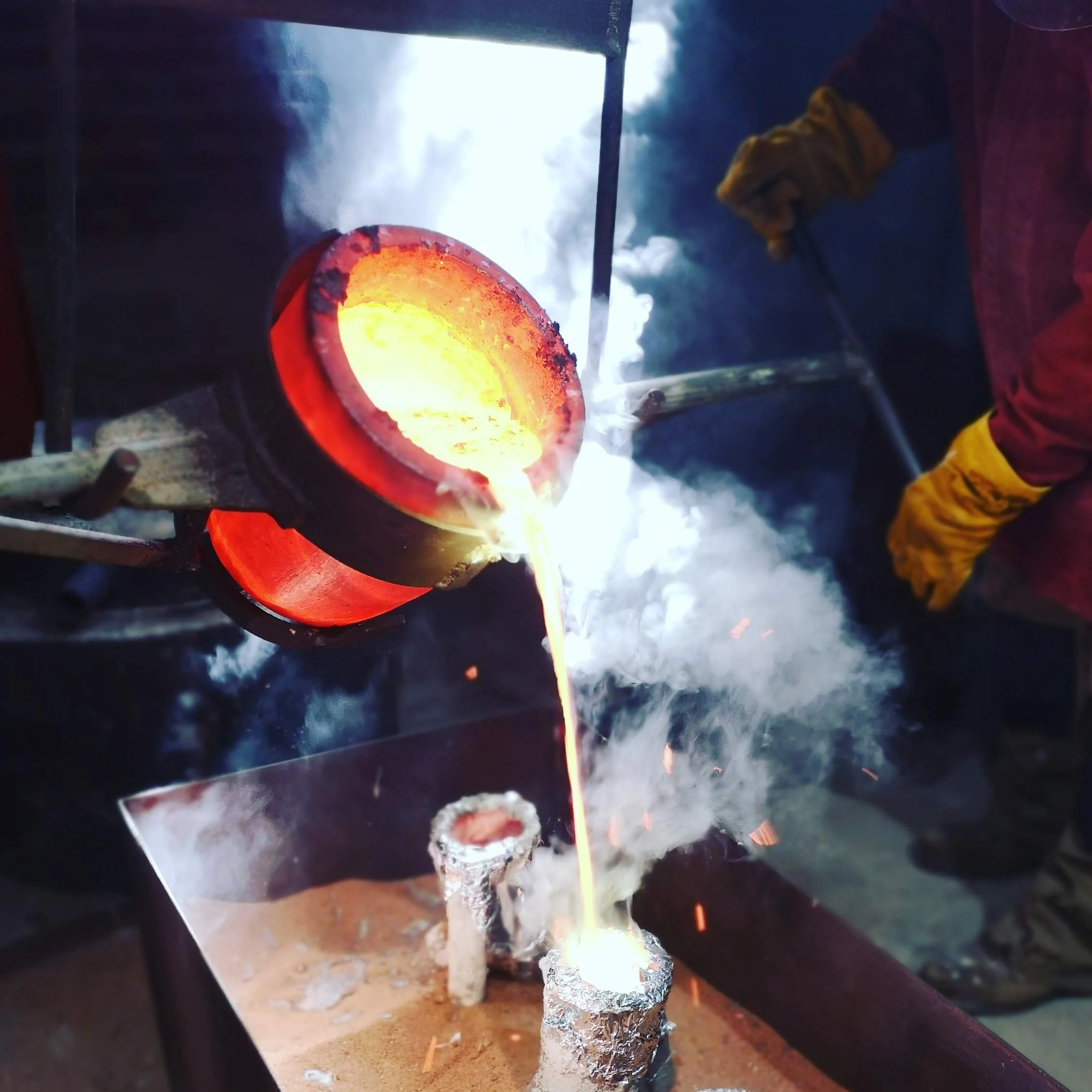
The moment the furnace lid lifts, the atmosphere shifts. You feel the radiant heat in your chest before you feel it on your skin. This is the narrow window where the metal is fluid enough to capture the most microscopic detail, a faint fingerprint, a delicate texture, a sharp edge.
There is no room for hesitation. The moulds have been preheated and bedded in sand. The crucible is lifted, illuminating the workspace like a captured sun.
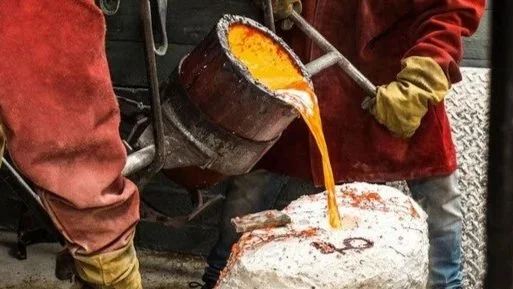
The pour is a singular, irreversible act of creation. As the crucible tilts, a golden flow of bronze enters the mould, displacing the air in a sudden, rhythmic rush of pressured gas. It is a profound transition, the void holding the empty form is instantly filled by the heavy, liquid soul of the sculpture. In these few seconds, the work is no longer an idea or a model, it is a molten force of nature seeking its boundaries. It is a moment both dangerous and beautiful.
The Cooling & The Reveal
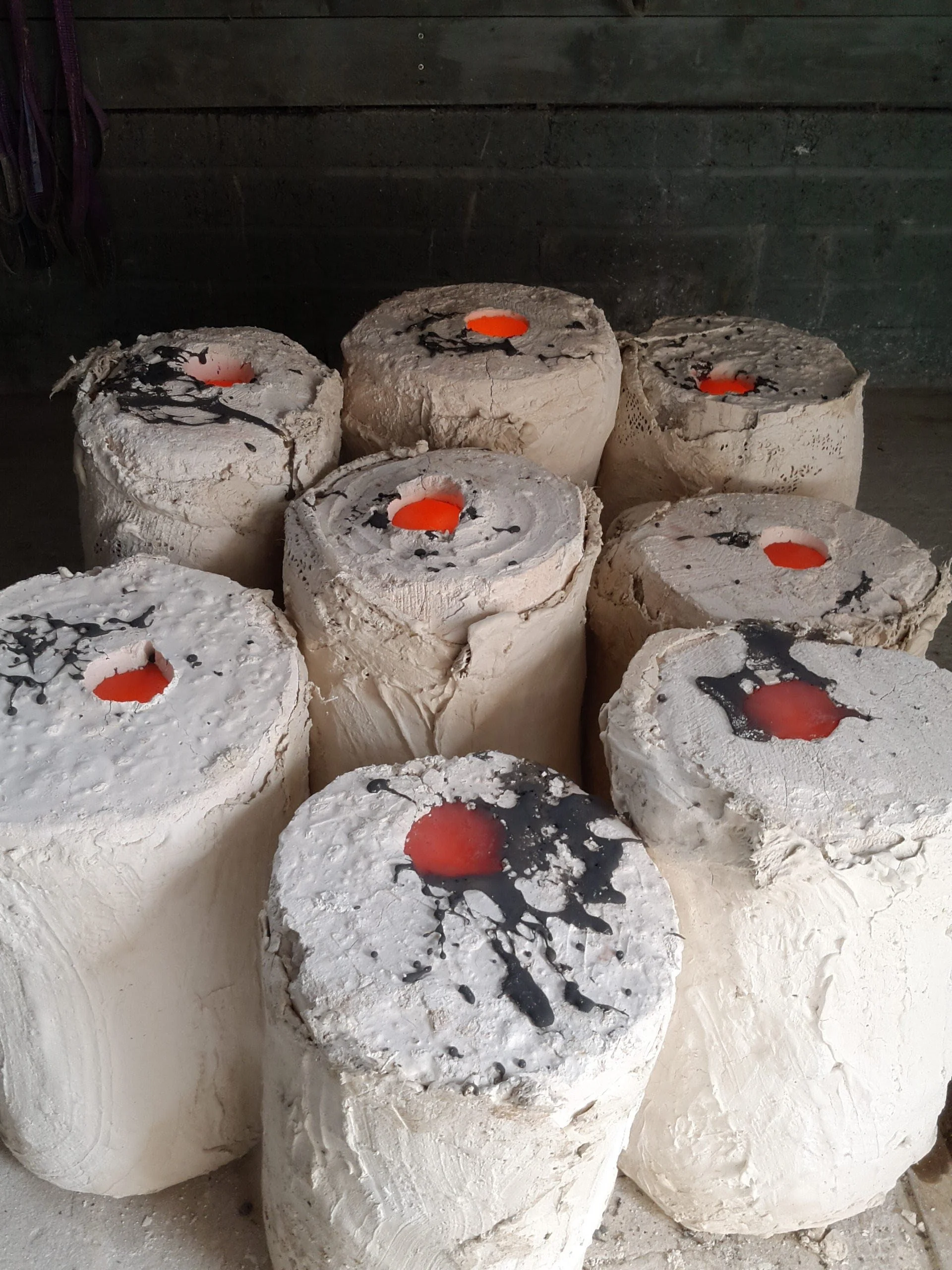
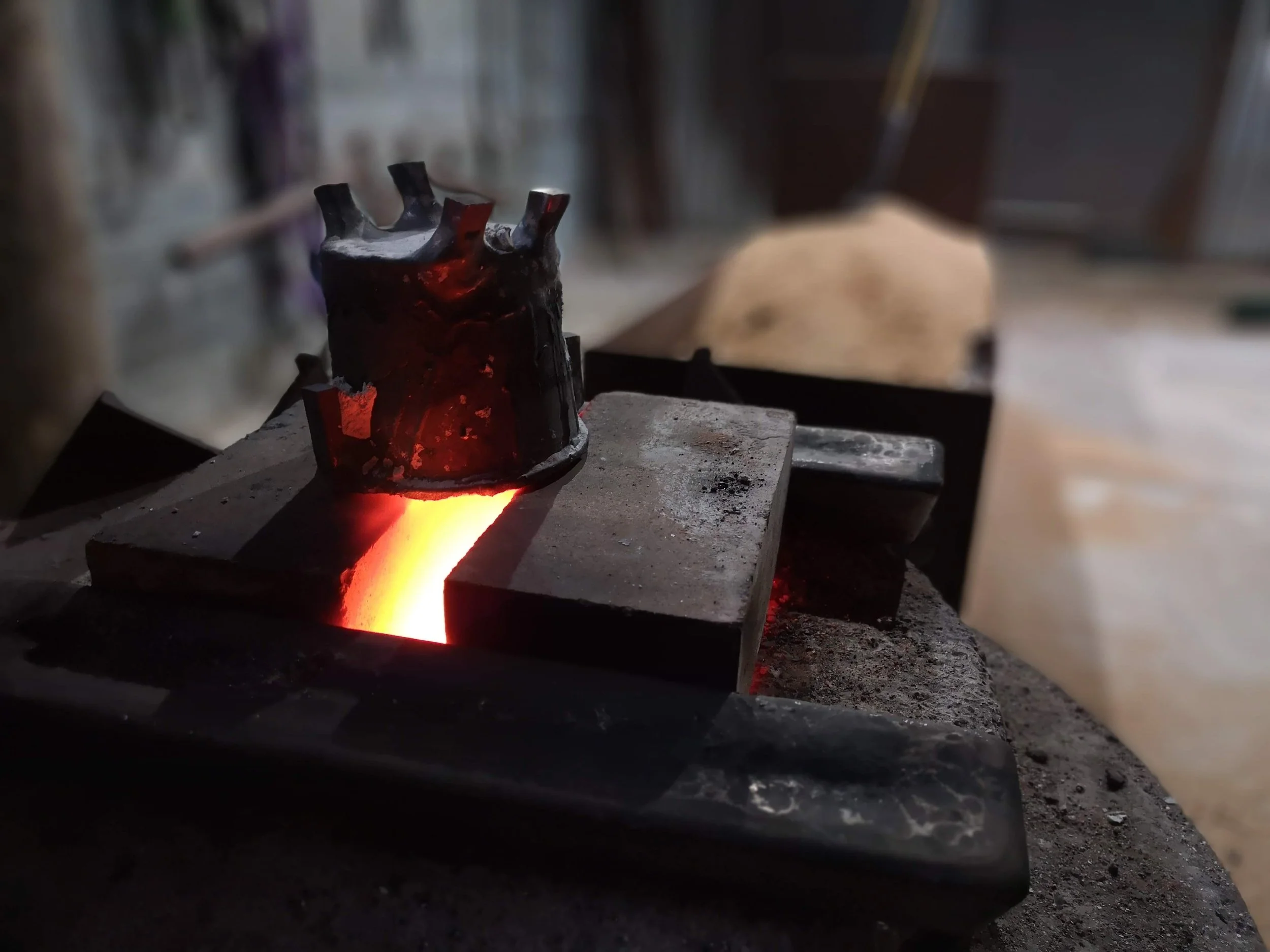
After the intensity of the pour, a heavy silence returns to the foundry. The brilliant glow in the cups of the moulds begins to retreat, fading to a deep cherry red and finally to a sombre, dull grey as the bronze freezes into its permanent state. This cooling is a slow, tectonic shift.
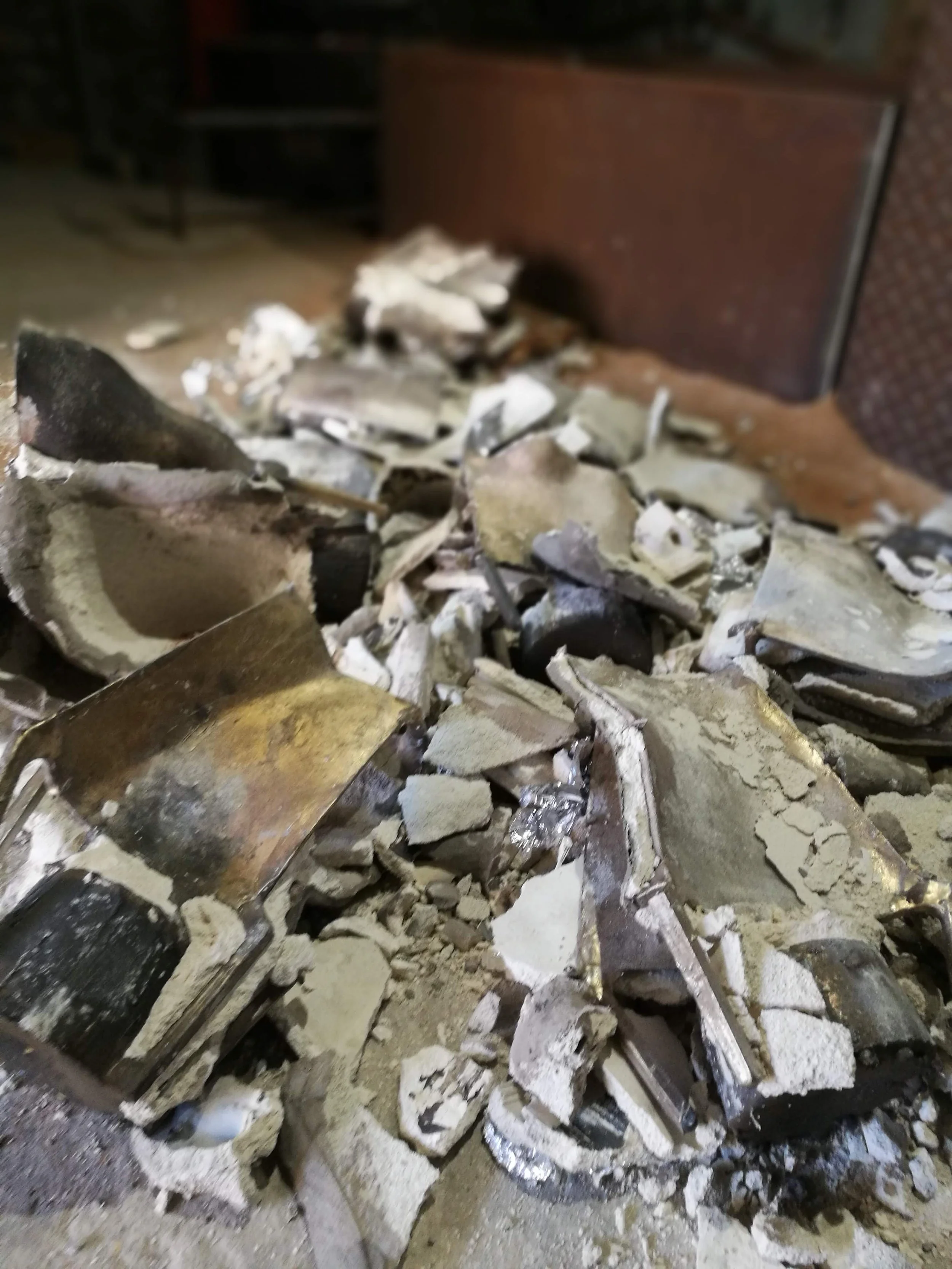
When the refractory mould is finally broken away a process that feels more like an archaeological excavation than modern manufacturing the work is revealed. It emerges born of fire and covered in the dust of its own creation, transformed into an object destined to outlast civilizations. It is no longer a concept, it continues its journey to a physical truth.
Why I Stand by the Fire
"People often ask why I spend days in the heat and dust of the foundry when the studio phase of my process is so calm and clean. 'You should employ others to do this work,' they say.
The answer is simple; there is a specific, haunting moment during the pour when the work is no longer a wax model, but hasn't yet become a finished sculpture. It exists as a liquid force volatile and raw. I need to be present at the crucible’s edge. I live for that breath of hesitation before the crucible tips and the molten bronze is released into the mould.
I believe in the intensity of that space; the distinctive smell of the hot metal, the visceral, searing heat when feeding the furnace and its deep, guttural roar. Even after hundreds of pours, the sheer weight of lifting the bronze and watching that liquid gold dance and roll still seeps into my being. It is a transfer of energy that no machine can simulate.
I stand by the fire because that is where the soul of the object is formed. It is the final, honest handshake between the artist and the elements."
— Jack Eagan